
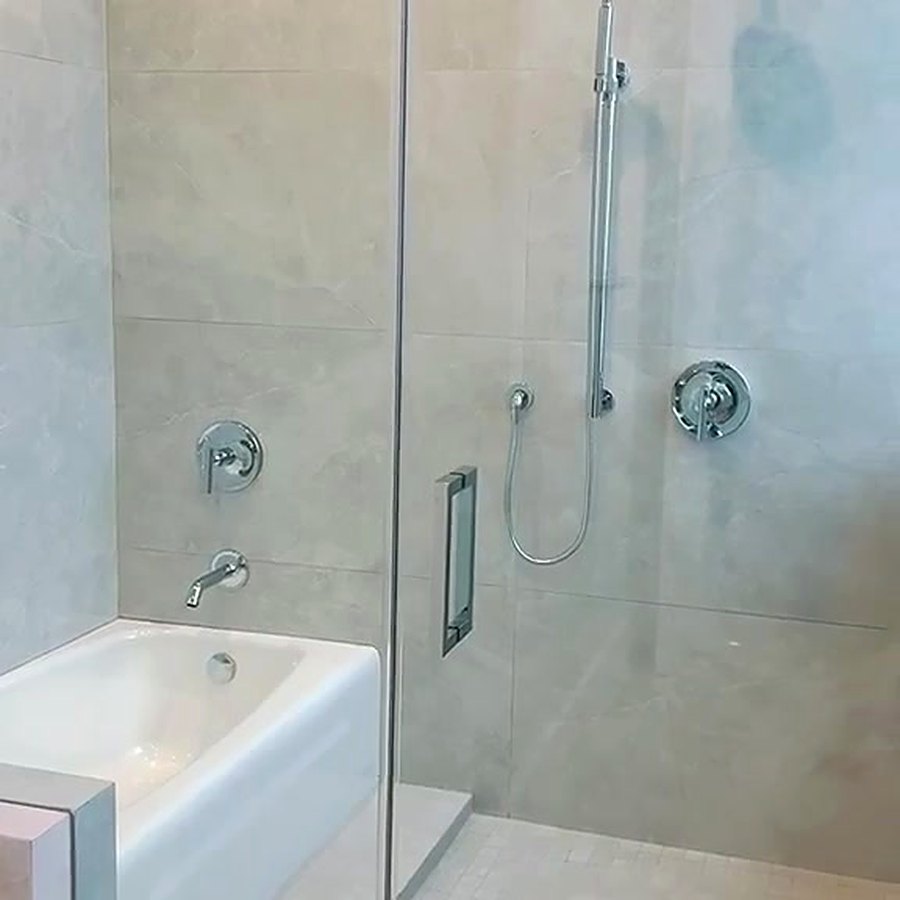
Cloudy shower glass, white crust around faucets and rings in the toilet bowl are all classic signs of hard water. Many South Florida homes have water with high mineral content, so these stains are common. The good news: they’re manageable with the right approach.
What causes hard water stains?
Hard water contains dissolved minerals, mainly calcium and magnesium. When water evaporates from a surface, those minerals are left behind as a chalky white film. Each time water dries in the same spot, the layer gets thicker and harder to remove.
Where they show up
- Glass shower doors and mirrors
- Faucets, shower heads and fixtures
- Tile, grout and tub surfaces
- Toilet bowls along the waterline
- Sinks, dishes and glassware
How to remove them
Mineral deposits are alkaline, so a mild acid helps dissolve them. Diluted white vinegar or a dedicated limescale remover is the usual starting point.
- Test first. Try any product on a small, hidden area before using it widely.
- Apply and wait. Spray or soak the area and let it dwell for several minutes. For fixtures, wrap a vinegar-soaked cloth around the faucet.
- Scrub gently. Use a non-scratch pad or soft brush. Avoid steel wool on glass, chrome or fiberglass.
- Rinse and dry. Rinse with clean water and dry completely with microfiber. Leaving it wet starts the cycle over.
- Repeat if needed. Older buildup often takes several rounds.
How to prevent them
- Squeegee after every shower. This is the single most effective habit.
- Wipe fixtures dry after use with a microfiber cloth.
- Run the exhaust fan to speed up drying and reduce moisture.
- Clean regularly so deposits never get a chance to harden.
- Consider a water softener if buildup is severe throughout your home.
Need a reset?
If buildup has gotten ahead of you, our shower & tub deep cleaning and mirror cleaning services remove residue and restore shine, so your daily routine is easier to keep up with.